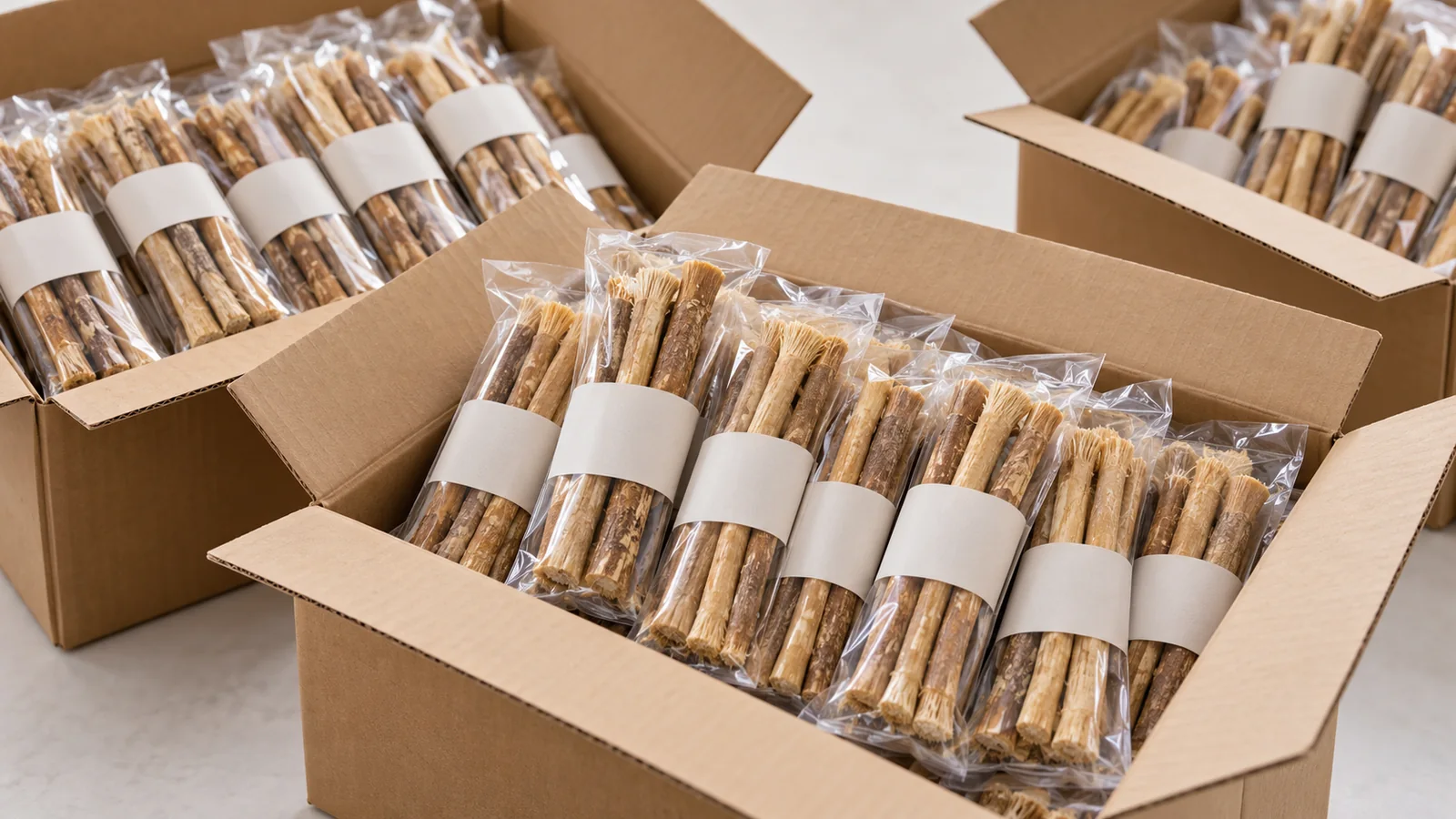
Peelu Miswak Wholesale Supplier for USA, UK & Europe
Published 2026-10-24 · Updated 2026-10-24
Wholesale Peelu miswak from Pakistan for USA, UK and European buyers, with vacuum-sealed packing, private label sleeves and clear export documentation.
USA, UK, and Europe buyers sourcing Peelu miswak from Pakistan need a clear description of the stick, its vacuum sleeve, and the receiving process. The Nectar Energy is a supplier/exporter supporting wholesale and private label enquiries. Open a miswak B2B sourcing enquiry with your destination and intended sales channel. A useful buyer file connects product identity, sample condition, packaging, artwork, and requested documentation before dispatch planning begins.
A Pakistan Peelu miswak wholesale USA search may come from a specialist retailer, distributor, or online brand. A vacuum sealed miswak wholesale UK enquiry may focus on shelf presentation and carton handling. For Salvadora persica wholesale Europe projects, identify the actual destination country and ask the supplier to confirm the proposed product description. Do not use a broad regional label in place of a receiving business.
Set the Buyer Channel and Destination Brief
Describe the channel that will handle the finished goods. A distributor needs reliable product and carton identification; a retailer needs a clear individual sleeve presentation; an online brand needs consistency between listing text and the delivered item. Ask who will review the wording, inspect the sample, and receive the shipment. Keep those names in the brief so each decision has an owner.
Separate USA, UK, and individual European destination records when a project covers several markets. The supplier can respond to a shared catalogue enquiry, but the importer and its appointed adviser should assess the requirements applicable to the particular goods and route. A satisfactory sample inspection does not establish destination acceptance. The sample and the destination review answer different questions.
Use the vacuum-packed miswak exporter guide to prepare the product questions and the Middle East and Europe miswak sourcing guide for packing context. This destination guide brings those questions into a named project. Ask for the proposed product identity and presentation in writing before moving to a branded sleeve or carton design.
Inspect the Stick and Vacuum-Sealed Presentation
Review the oral care collection and Vacuum-Sealed Peelu Miswak. Ask the supplier to identify the proposed stick and the sleeve presentation. The sleeve should allow the receiving team to inspect its condition without opening it. Keep photographs of the reference sample, seams, and seal area with the product description.
During sample review, inspect for damaged sleeves, separated seams, punctures, and loss of the intended vacuum appearance. Record observations rather than assuming every visual difference has the same cause. Set aside a questionable sample for supplier review and preserve the sleeve. An informal description of the concern is less useful than a photograph connected to the actual sample reference.
Define what the sample is intended to establish. It may resolve product appearance, the sleeve layout, carton identification, or a proposed private label presentation. A sample should not be asked to prove facts outside the observations made. If a buyer needs additional evidence about the proposed goods, put that question into the document checklist rather than inferring an answer from the sleeve's appearance.
The Nectar Energy catalogue includes Himalayan Shilajit Resin, Shilajit Liquid Drops, Shilajit Powder Pouch, Sidr Honey, Acacia Honey, Moringa Leaf Powder Pouch, Ashwagandha Root Powder Pouch, and Peelu Miswak. Each line deserves its own product specification, evidence review, and receiving criteria. A focused enquiry can cover one line or combine several without implying that one market or product has a lesser role.
For a mixed order, keep a separate reference for each format. Resin and honey use sealed glass jars, liquid drops use dropper bottles, all powders use resealable food-grade pouches, and miswak uses vacuum-sealed sleeves. A shared visual identity can connect the collection while the physical containment remains appropriate to each item. Record substitutions for review before they enter the shipment.
Confirm Product Documentation per Order
Quality documentation for this product line is confirmed per order. Buyers can see current lab reports and ask which documents are relevant to the proposed goods. Record the product identity, document availability, and any unanswered questions in the order file before approving the specification.
Develop Sleeve Artwork and Transit Packing
Build a sample review sheet that follows the sleeve through the intended receiving and display steps. Identify the reference being reviewed and record the carton arrangement supplied with it. Note the condition of each seam, the visibility of the product, and whether batch coding remains readable. Assign follow-up questions to a named buyer or supplier contact so a photograph does not become the only record of an unresolved concern.
For private label work, provide the designer with the agreed product description and the actual sleeve template. Keep drafts clearly identified and collect comments against a single revision. If a text change moves the coding area or obscures the product, check the revised layout on a filled reference before releasing it. Retain photographs that show both the approved appearance and the functional areas that receiving staff need to inspect.
Prepare a repeat-order handover before the first shipment leaves. List the accepted sleeve reference, carton arrangement, artwork revision, and unresolved questions. For a later enquiry, ask whether any of these details have changed and request a written description of proposed substitutions. Have the receiving team compare the delivered presentation with the approved reference rather than relying on memory. A clear record helps purchasing and warehouse staff discuss discrepancies using the same product identifiers and gives the supplier a useful basis for responding.
Request the actual sleeve template and identify the seam, sealing area, product visibility, and coding position. Keep the proposed design clear of areas needed for inspection and closure. If a label is added to the sleeve, check its behaviour on the actual material rather than approving it only on a flat digital preview. The product should remain identifiable after normal handling.
Have the destination reviewer assess the proposed product wording and responsible business information before the artwork is released. Keep the approved revision and sample photographs together. A new logo placement can affect visibility or cover coding, so even a visually small edit should be checked against the functional areas of the sleeve. Avoid adding unsupported benefit language during branding.
Review the outer carton with representative sealed sleeves inside. Sharp edges, excessive movement, or pressure from neighbouring items can damage a presentation that looked intact at sample stage. Ask how sleeves are arranged and separated, and retain a packing photograph. For mixed orders, identify the miswak cartons clearly so receiving staff can locate them without opening unrelated goods.
Agree a change process for sleeve material, label method, or carton layout. The supplier should describe the proposed change before it replaces the approved reference. Some changes may need a fresh filled sample or packing review. Keep the decision linked to the shipment record so the receiving team knows which arrangement to expect.
Ask for Documentation and Receiving Criteria
We share available origin information, product descriptions, COA where available, and proposed labelling information on request. State which records your receiving business wants to review, and ask the supplier to confirm availability. Distinguish existing documents from requested preparation. Do not assume that a report for another catalogue item answers a miswak evidence request.
The importer and its appointed adviser should assess destination requirements for the specific product and intended route. This guide does not promise clearance or approval. Confirm the proposed product wording, consignee details, packing descriptions, and batch references before dispatch documents are finalised. Resolve inconsistencies in the written file rather than relying on a later verbal explanation.
At receipt, compare carton identity, sleeve condition, coding, and the accompanying records with the approved specification. Set a clear process for holding affected items when a sleeve is punctured or the product identification does not match. Photograph the outer carton and internal arrangement as well as the affected sleeve. Keep the evidence traceable to the shipment so both parties can review the same concern.
Write a Miswak Quote Request with Clear Decisions
Send the destination country, importer or receiving business, intended channel, product description, vacuum-sealed sleeve requirement, artwork status, document checklist, and receiving window. Tell the supplier whether the next decision concerns a reference sample, a branded proof, or a repeat order specification.
Ask for a written response identifying the sample reference, sleeve and carton arrangement, evidence availability, and open questions. Keep the sample inspection separate from artwork approval and destination review so each decision remains clear. If the product presentation or receiving market changes, revisit the affected part of the brief before proceeding.
Request a B2B quote: send your sourcing brief through For Businesses or contact The Nectar Energy about your B2B enquiry. Include the destination, product names, format, intended channel, private label status, requested documents, and receiving window. Ask for a written response that distinguishes confirmed details from open questions.
Questions
How is Peelu miswak presented for wholesale enquiries?
Peelu miswak is presented in vacuum-sealed sleeves with an outer carton arrangement agreed for the project. Ask for a reference sample and packing photographs. Inspect sleeve seams, punctures, coding visibility, and the condition of the proposed individual presentation before approving the specification.
How is miswak quality documentation confirmed?
Quality documentation for this product line is confirmed per order. Buyers can review current lab reports on the quality page and ask which documents concern the proposed miswak. Record the response and retain any unresolved document request in the project checklist.
What should a private label sleeve proof show?
It should show the actual template, product wording, label position, seams, sealing area, visibility, and coding space. Have the destination reviewer assess the text. Retain a filled sample reference and an approved revision so later changes can be reviewed against a clear record.
Can one enquiry cover USA, UK, and Europe?
Yes, but identify the actual receiving countries and businesses. Retain separate destination review decisions and any differences in artwork or requested documents. A shared product sample can support the project where its specification matches, while each importer reviews the intended route and channel.
How should a damaged sleeve be handled at receipt?
Record the carton and affected product references, preserve the sleeve and packing materials, and take clear photographs. Keep affected goods identifiable while the responsible teams review the concern. Compare the observations with the approved sample and carton arrangement before deciding the next action.