The Nectar Energy: Who We Are and What We Supply
Published 2026-10-25 · Updated 2026-10-25
Learn about The Nectar Energy, a Pakistan supplier and exporter, with clear answers on its product range, documented lab findings and B2B sourcing process.
The Nectar Energy is a Pakistan-based supplier/exporter with a catalogue spanning shilajit, honey, herbal powders, and natural Peelu miswak. If you are evaluating the business for a trade enquiry, begin with the For Businesses page and identify the products and documents you want to review. This FAQ guide explains the documented product range, the specific laboratory findings available, and the B2B RFQ, sample, and private label process.
People searching for Nectar Energy Pakistan or thenectarenergy may be trying to establish who supplies the goods and what information supports a buying decision. Those questions deserve factual answers. Review the main website and about page, then connect the information you find to a specific enquiry. A brand overview provides context; a proposed order still needs its own product identity, evidence review, and written specification.
Who Is The Nectar Energy?
The Nectar Energy works as a supplier/exporter from Pakistan. Its B2B process gives buyers a route to discuss product selection, reference samples, packaging presentation, private label artwork, and available documents. The useful starting point is the receiving business and its intended channel. A distributor, retailer, or brand team can then ask questions relevant to the goods it is considering rather than relying on a general catalogue description.
Keep the business role clear in your internal records. The supplier/exporter description identifies how to frame the sourcing conversation. It does not remove the need to ask about the proposed product, sample reference, and supporting file. If your team needs sourcing or origin information, request the available records for the actual product and retain the response alongside the specification being discussed.
Buyers across destinations should provide the same core information: the receiving business, product identity, intended channel, sample needs, and document questions. A project spanning several destinations can share a catalogue overview while keeping the destination assessments distinct. This makes the enquiry easier to answer and prevents one market's artwork or receiving instructions from being copied into another file without review.
What Are the Eight Product Lines?
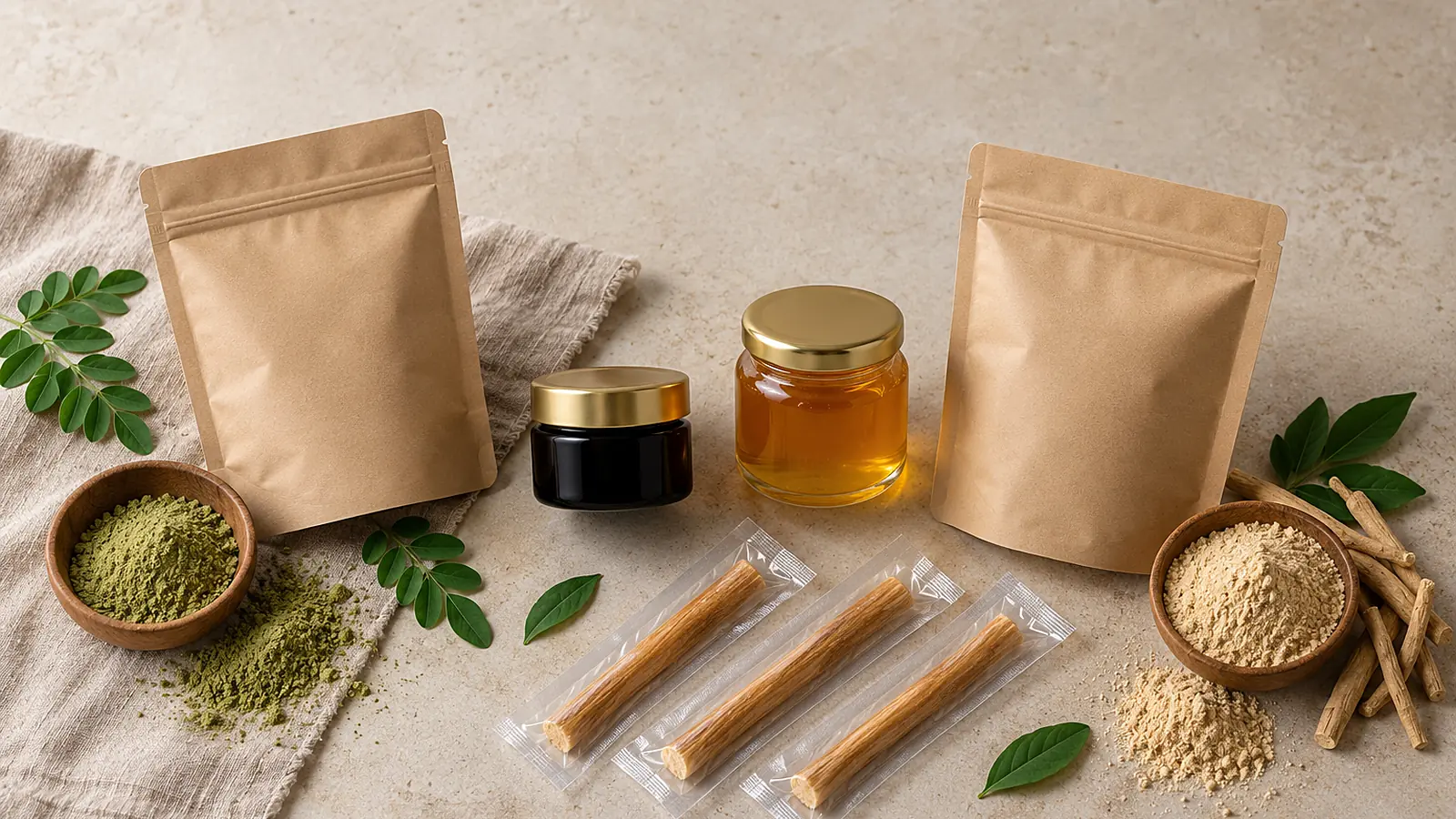
The catalogue includes eight product lines: Himalayan shilajit resin, shilajit liquid drops, shilajit powder, Sidr honey, Acacia honey, moringa leaf powder, ashwagandha root powder, and natural Peelu miswak. Explore the shilajit collection, honey collection, herbal powder collection, and oral care collection to organise the range. Keep the individual product identity visible when moving from a category page to an enquiry.
The range uses different presentations. Resin and honey use sealed glass jars, liquid drops use dropper bottles, and all powders use resealable food-grade pouches. Peelu miswak uses vacuum-sealed sleeves. Moringa and ashwagandha should therefore be described with their pouch presentation in an artwork or packing brief. A shared brand design can connect the catalogue without replacing the specific container description for each line.
For a mixed enquiry, create a separate reference for each product and format. Specify whether you want to review an existing presentation or discuss private label artwork. Keep sample photographs and document questions attached to the relevant line. This is especially useful when a buyer is considering honey and shilajit together: a report or packing detail associated with one should not be copied automatically into the other product's file.
Is The Nectar Energy Legit?
A factual answer rests on the documented business description, product range, specific laboratory records, and the sourcing process available to a buyer. The Nectar Energy is presented as a Pakistan-based supplier/exporter with a B2B enquiry route and a process for discussing RFQs, samples, and private label requirements. These facts give a buyer concrete points to check. They should be examined alongside the proposed order rather than turned into a broad promise about every transaction.
The documented Himalayan shilajit finding is from PCSIR Laboratories, dated 18-09-2026: heavy metals not detected in the tested sample. The documented Sidr honey finding is from NIH Islamabad, dated 03-08-2026, for batch FIT-SIDR-02: satisfactory, with the Fiehe test negative. Keep each finding tied to its own sample or batch and examination scope. Neither statement establishes results for the whole catalogue.
Request the available report copies through the quality page and ask how the proposed goods relate to the references. For Acacia honey, powders, and miswak, documentation is confirmed per order through that same quality route. If your team needs further evidence, record the request and assess the response before deciding. These are practical checks a buyer can perform without substituting an unsupported reputation claim for documentary review.
How Do RFQs and Sample Assessments Work?
An RFQ begins with a usable sourcing brief. Identify the product, format, destination, receiving business, intended channel, artwork stage, and document needs. Explain whether the enquiry is exploratory or tied to a specific receiving window. The RFQ and sample process guide provides a more detailed framework for turning these inputs into a discussion the supplier can answer.
Ask for a sample reference that identifies the proposed goods and presentation. Record what is received before sharing it with other reviewers. Photographs should show the pack, closure, and identifying information. Describe observations directly, and keep questions about appearance or handling connected to that reference. A sample becomes more useful when another person can understand what was inspected and which points still need clarification.
Before moving forward, compare the written proposal with the sample notes. Ask the supplier to distinguish confirmed details from unresolved questions. If the format or destination changes, review the affected decisions again. Retain correspondence, photographs, and document responses in one buyer file so a design or warehouse handover does not detach the physical sample from the specification it was meant to represent.
What Does a Private Label Enquiry Need?
A private label discussion should identify who owns the artwork and who can authorise changes. Request the actual container template and connect it to the selected product reference. A designer needs the intended print surface and coding space, while the destination reviewer needs the proposed product wording and business information. Keep those inputs together rather than sending disconnected fragments to different members of the team.
Review the complete filled presentation, including the closure and outer packing arrangement. For powders, confirm the resealable food-grade pouch and its label layout. For miswak, review the sleeve and product identification. For honey and resin, examine the proposed jar and closure together. Record the approved artwork revision and mark replaced files clearly so the final packing discussion uses one agreed reference.
The B2B export and documentation guide offers further questions about records and handovers. Your importer and appointed adviser should review the actual destination requirements. Supplier information supports that review but does not settle every receiving question. Keep product descriptions, consignee information, and document references consistent, and ask for written clarification wherever two parts of the file disagree.
How Can Buyers Make a Reviewable Sourcing Decision?
Begin with what your team can verify: the business description, the named product, the proposed presentation, the sample reference, and the documents actually supplied. Give each open question an owner. A completed checklist should show the basis for a decision, not simply that someone saw a website or received a report. This helps a new colleague understand the project without relying on memory.
Build the receiving sheet before the order handover. Include carton condition, product identity, legible coding, closure condition, and expected documents. Explain how discrepancies should be recorded and who will review them. If a concern arises, retain photographs and relevant packaging with the affected product reference. A shared factual record makes a follow-up discussion more precise for both the buyer and supplier.
For future enquiries, retain the agreed specification but check what remains current. A previous sample decision does not answer a new question about another product or destination. Reconfirm the relevant presentation and document status, especially where the artwork or receiving business has changed. The strongest brand FAQ answer is therefore a starting point for evidence-based enquiry, followed by a written record of the actual goods under discussion.
When several colleagues review a supplier, agree which questions each person will assess. Purchasing can track the proposal, design can track the artwork revision, and the receiving team can check the pack identifiers. Keep their responses in the same file. A decision based on shared references is easier to explain than one assembled from separate recollections of a catalogue page, sample conversation, or document attachment.
Request a B2B quote: send your product brief through For Businesses or contact The Nectar Energy about your B2B enquiry. Include the destination, product identity, intended channel, sample needs, artwork status, requested documents, and receiving window. Ask for a written reply identifying confirmed details, open questions, and the next decision.
Questions
What does The Nectar Energy supply?
The Nectar Energy supplies Himalayan shilajit resin, drops and powder; Sidr and Acacia honey; moringa and ashwagandha powders in resealable food-grade pouches; and natural Peelu miswak. Keep separate product and presentation references when requesting samples or preparing a mixed B2B enquiry.
Is The Nectar Energy legit?
The documented facts identify The Nectar Energy as a Pakistan-based supplier/exporter with a B2B RFQ, sample, and private label process. Specific shilajit and Sidr honey report findings are available for review. Request the records and check their relationship to the proposed goods before deciding.
Which laboratory findings can buyers review?
The Himalayan shilajit sample finding from PCSIR Laboratories dated 18-09-2026 records heavy metals not detected. NIH Islamabad dated 03-08-2026 records Sidr honey batch FIT-SIDR-02 as satisfactory, with the Fiehe test negative. Keep each finding within its own reported scope.
Does The Nectar Energy have documentation for every product enquiry?
For Acacia honey, powders, and miswak, documentation is confirmed per order through the quality page. Ask The Nectar Energy which records are available for the proposed goods and keep unresolved requests visible. The named shilajit and Sidr findings do not establish results for those other lines.
How can I begin a private label enquiry with The Nectar Energy?
Use For Businesses with the product, format, destination, intended channel, sample needs, artwork stage, requested documents, and receiving window. Ask The Nectar Energy for a written response connecting the proposed goods to their presentation and identifying any questions still awaiting review.