Private Label Packaging & Artwork Specification Guide for Export Buyers
Published 2026-10-23 · Updated 2026-10-24
Step-by-step private label and OEM artwork specification guide from The Nectar Energy for international distributors sourcing shilajit, honey, herbal powders and miswak.
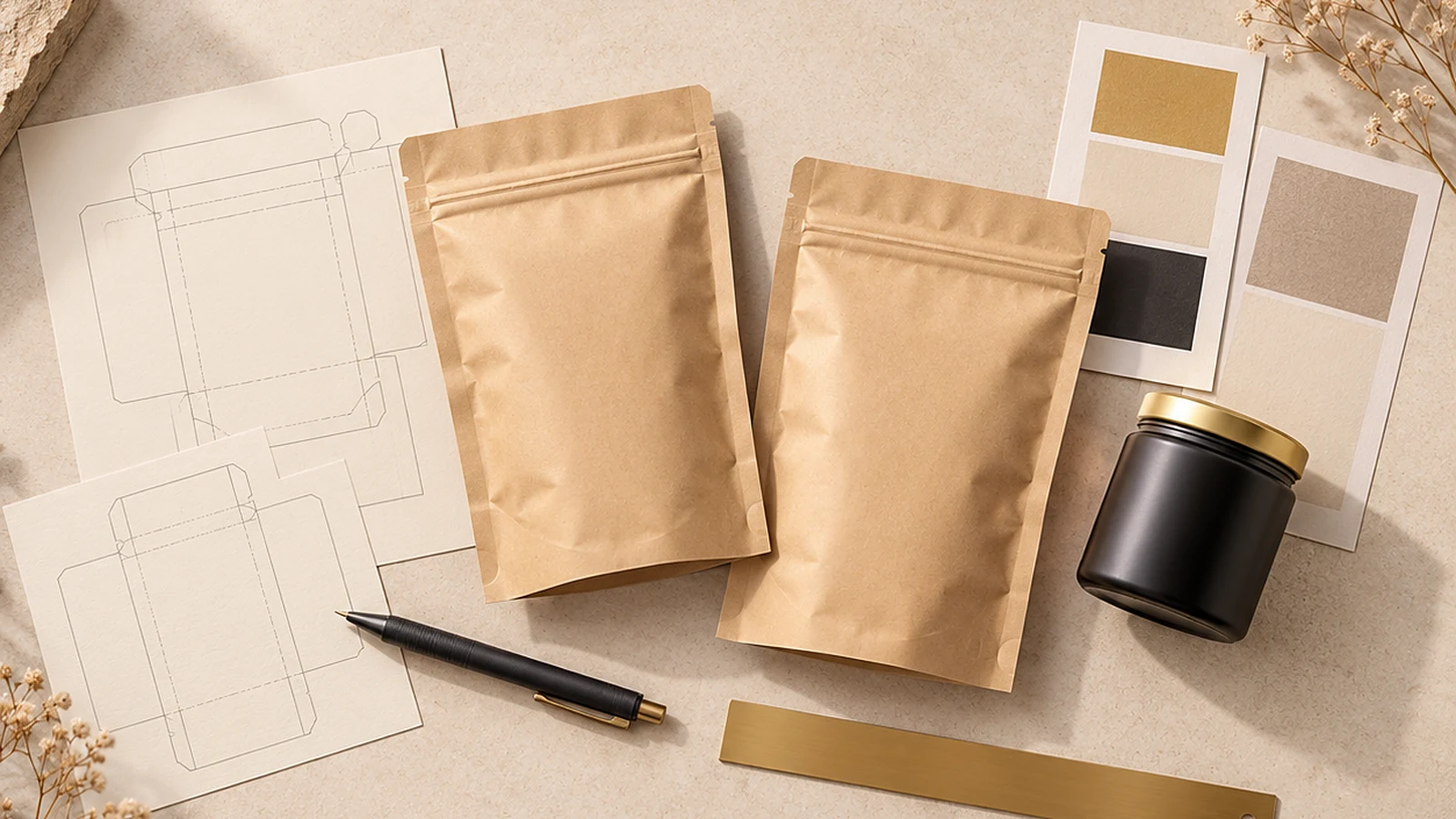
Cover illustration: packaging and documentation concepts, not an actual laboratory report, facility or customer order. Final artwork is subject to review.
Private label packaging succeeds when the buyer, designer, printer, and packing team share one precise specification. A visual concept alone cannot establish container fit, readable coding, correct product identity, or the final approved wording. For export projects with The Nectar Energy in Pakistan, begin by separating the brand design from the physical requirements of each product. Then connect them through controlled templates, proofs, and sample approval. This guide provides a practical sequence for preparing artwork across shilajit, honey, herbal powders, and Peelu miswak while keeping packaging assignments and evidence statements accurate throughout the catalogue.
Write the Product and Destination Brief First
Before commissioning artwork, identify every product included in the project and the format assigned to it. Resin and honey use jars, liquid drops use dropper bottles, powders use resealable food-grade pouches, and miswak uses vacuum-sealed sleeves. List the intended brand owner, distribution channel, destination, and language requirements. This gives the designer a stable starting point instead of a collection of assumptions about similar-looking packs.
Distinguish private label, OEM, and white label requests by describing the actual work expected. Specify whether the buyer is supplying finished artwork, requesting adaptation to an existing template, or asking for a new design direction. Confirm who owns source files, who checks product wording, and who approves the print-ready version. Clear responsibilities matter more than relying on a label for the service arrangement.
Create a brief for each product even when the range shares a common appearance. Product names, container surfaces, batch fields, and language panels can differ. A project overview can list shared brand rules, while individual specification sheets identify the details that must not be copied blindly between lines. Keep all open decisions visible until a named reviewer resolves them.
Obtain Dielines for the Actual Pack
A dieline should come from the party responsible for the actual print or label application process. Ask for the current template, its reference, and any instructions about bleed, safe areas, folds, seams, and printable surfaces. Confirm whether the artwork is printed directly onto the pack or applied as a separate label, because the production constraints differ.
Pouch artwork must accommodate the zipper, heat seal, base folds, and any window. Jar labels must account for curvature and overlap. Dropper bottle artwork must remain clear of the neck and closure. Miswak sleeve artwork must preserve seam integrity and leave the product identification readable. These are separate templates, even if the front-facing brand elements appear similar.
Ask the designer to retain the template as a clearly marked non-printing reference where the production workflow supports that approach. Do not redraw a supplied template from a screenshot. If a component changes, obtain a revised template and review the complete layout again. Record both the container reference and the template revision so the approved design remains tied to the pack that will actually be filled.
| Format | Layout constraint | Proof checkpoint |
|---|---|---|
| Resealable powder pouch | Zipper, folds, and seal areas | Readable panels on a filled pouch |
| Resin or honey jar | Curved surface and label overlap | Alignment and accessible closure |
| Dropper bottle | Narrow label panel and neck | Clear identification and coding |
| Vacuum-sealed miswak sleeve | Seams and inspection area | Legible print without hiding seal condition |
Prepare Files for Controlled Print Review
Ask the printer for its required file format and colour workflow before exporting final artwork. Supply linked assets or embedded assets according to that workflow, and confirm how fonts should be handled. Keep the editable source package separate from the approved print file so future edits do not silently replace the production version. Use descriptive filenames that identify the product, language, and revision.
Review image quality at the intended print scale. A sharp screen preview can hide a low-detail asset or fine text that becomes difficult to read on a curved pack. Check that brand marks, small text, and reversed text remain clear against the chosen background. For colour-sensitive branding, agree a physical reference and discuss how the actual material finish influences appearance.
Request a proof that reflects the real printing process as closely as practical. A monitor preview cannot fully represent metallic effects, matte films, transparent windows, or adhesive labels on amber glass. Record which features the proof does and does not demonstrate. This makes the approval meaningful and prevents a digital layout sign-off from being mistaken for acceptance of every material and print characteristic.
Control Wording and Evidence on Every Panel
Create a text register before laying out the final panels. It should contain the approved product name, ingredient wording supplied for review, storage instructions, batch coding labels, brand owner information, and any destination-specific text identified by the buyer. Assign a reviewer to each field. A designer should not have to invent missing product statements to complete the visual layout.
Keep laboratory references tightly scoped if they are proposed for inclusion. The PCSIR Laboratories Pakistan report dated 18-09-2026 concerns heavy metals not detected in a Shilajit sample. The NIH Islamabad report dated 03-08-2026 concerns Sidr honey batch FIT-SIDR-02, with a satisfactory conclusion and a negative Fiehe test. Neither finding should become a catalogue-wide claim or move onto an unrelated product panel.
Proofread all languages against the approved text register, including the back panel and small print. Check that a translation has not broadened a documented finding. The responsible buyer should confirm local wording requirements before authorising print. Keep any unresolved field visibly marked in the review copy; an empty placeholder can otherwise disappear into the design and be mistaken for an intentional omission.
Approve the Physical Mockup and Coding Area
A physical mockup reveals problems that flat artwork can conceal. Place the proposed label on the actual jar or bottle, or assess the printed pouch in its filled shape. Read the product name and back panel from normal handling positions. Check alignment, overlap, folds, and the relationship between the label and tamper features. Confirm that the design does not obstruct opening or inspection.
Reserve a practical coding area and check it with the intended coding process. The batch identifier and date fields should remain readable after filling, sealing, carton packing, and ordinary handling. Avoid placing the code on a fold, a highly reflective patch, or an area likely to rub against another container. Ask the packing team to confirm that the proposed position is accessible on the line.
Use the mockup review to verify the complete range together. Similar colours can help a family resemblance but may make product selection harder if the names are weakly distinguished. Photograph the accepted presentation and identify the artwork revision in the approval record. Keep a reference sample where practical, with clear ownership and storage arrangements for future comparisons.
- Read every panel on the actual container or a representative filled mockup.
- Check batch and date coding with the intended application process.
- Identify the accepted sample and artwork revision in the approval record.
Release One Revision and Manage Later Changes
Production release should identify one approved artwork file for each product and language combination. Record who approved it, the date, the container reference, and the proof or sample reviewed. Archive superseded files so they cannot be mistaken for current instructions. A shared folder containing many files labelled final is not a reliable release process.
Before dispatch, request confirmation that the printed pack matches the released artwork and coding arrangement. If a material, closure, print process, or supplier changes, ask whether the existing approval still applies. A visually minor substitution can affect label adhesion, colour appearance, or readable space. Record the decision and obtain another sample when the change alters a feature that mattered during approval.
For repeat orders, review the text register as well as the artwork. Brand contact details, destination wording, batch statements, or product instructions may need attention even when the graphic design is unchanged. Give the warehouse a reference image and the current specification so receiving staff can identify an outdated pack. Controlled revisions make repeat production predictable and keep the private label range coherent across shipments.
Plan the Complete Catalogue and Buyer Handover
A packaging brief should cover the whole catalogue with equal attention to each line. Explore the shilajit collection, honey collection, herbal powders collection, and oral care collection before assembling a mixed order. The same written review process applies for buyers in the UAE, Saudi Arabia, Qatar, Kuwait, Oman, Bahrain, UK, USA, EU, and Pakistan. Destination details belong in the project specification so the buyer can confirm local requirements without changing the agreed product identity.
Use For Businesses to outline the intended distribution channel, artwork ownership, packing arrangement, and receiving schedule. Consult the quality documentation for the available report evidence, then contact the team with unresolved specification questions. Ask for a written response that identifies the proposed batch, packaging revision, and any information still awaiting approval. Keep that response alongside the purchase specification and receiving checklist so warehouse and commercial teams work from the same record.
| Product line | Required presentation | Handover focus |
|---|---|---|
| Himalayan Shilajit Resin | Sealed glass jar | Lid and liner fit |
| Shilajit Liquid Drops | Dropper bottle | Closure and insert fit |
| Shilajit Powder Pouch | Resealable food-grade pouch | Heat seal and zipper |
| Sidr Honey | Sealed glass jar | Liner and clean rim |
| Acacia Honey | Sealed glass jar | Closure integrity |
| Moringa Leaf Powder Pouch | Resealable food-grade pouch | Dry seal area |
| Ashwagandha Root Powder Pouch | Resealable food-grade pouch | Barrier and reseal |
| Peelu Miswak | Vacuum-sealed sleeve | Vacuum and seam integrity |
Questions
What belongs in an initial private label brief?
List the products, assigned packaging formats, destinations, languages, distribution channel, and artwork responsibilities. Clarify whether finished files or design support are needed. Include open questions about templates, coding, and evidence wording so they can be resolved before a designer prepares the print-ready layout.
Can one dieline be reused for different containers?
Only use a template confirmed for the actual container and print process. Pouches, jars, dropper bottles, and vacuum sleeves have different seams, folds, and printable areas. A common brand style can be retained, but each format needs its own reviewed layout and approved reference.
Who should approve translated label text?
The buyer should identify a responsible reviewer for each language and confirm destination wording requirements. Compare every translation with the approved text register. Preserve the narrow scope of any evidence statement, and resolve placeholders before authorising print rather than allowing the designer to infer missing information.
Is a digital proof sufficient for approval?
A digital proof helps check layout and copy, but it cannot fully establish physical fit, material appearance, label adhesion, or coding readability. Review a representative physical mockup or sample for those features. Record which characteristics were accepted and which still require confirmation before production release.
How should repeat-order artwork be controlled?
Retain one released revision for each product and language, with its container reference and approval record. Archive older versions and review any material or text changes before reuse. Confirm that batch statements remain relevant and provide the receiving team with an image of the current approved pack.