Private Label Shilajit Supplier for USA & UK Importers
Published 2026-10-24 · Updated 2026-10-24
A practical guide for USA and UK importers planning shilajit resin private label from Pakistan, from sample review and packaging to export paperwork.
USA and UK importers planning a private label shilajit range need an agreed product specification before approving a label. The Nectar Energy is a Pakistan supplier/exporter offering resin, liquid drops, and powder presentations. Use the private label B2B enquiry page to describe your market, channel, and artwork stage. The purchasing process should connect the physical sample to the pack template, evidence file, and receiving checklist.
A shilajit resin Pakistan private label USA search often begins with visual branding. A shilajit drops wholesale UK supplier search may begin with a preferred bottle presentation. Neither starting point removes the need to identify the actual product and proposed shipment. Give the receiving business a named reviewer and a written list of open questions before moving into artwork approval.
Separate the USA and UK Importer Briefs
State which business will import the goods, which business will appear in the proposed label information, and who will review the intended sales channel. A USA enquiry and a UK enquiry can share a brand identity while still requiring distinct market reviews. Ask your appointed adviser to assess the intended product presentation and the wording you plan to use. Keep the supplier's factual product information separate from the buyer's destination assessment.
For an established distributor, the enquiry should explain how the new line fits existing warehouse and catalogue records. For a new private label brand, specify who controls the artwork files and who can approve changes. Online retailers should review listing text alongside the physical label so product identity is consistent throughout the buyer journey. Do not leave those decisions to a designer working from a container photograph.
The packaging artwork specification guide explains how to prepare a usable design handover. Use its questions to build the supplier brief, then record the USA or UK review decisions against the correct artwork revision. Reopen the affected parts of the specification when the market, product format, or label owner changes.
Select Resin, Drops, or a Powder Pouch
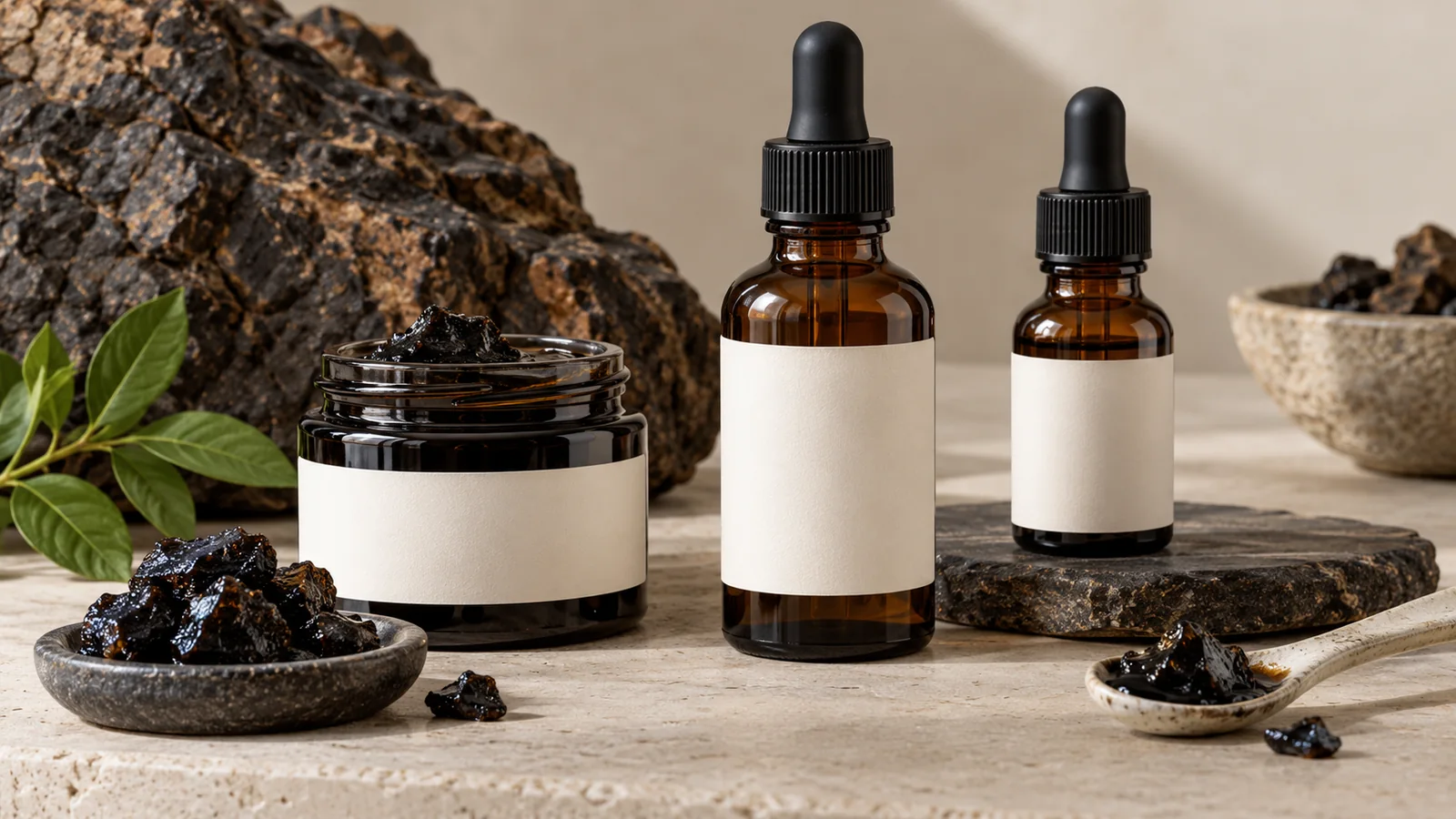
Start with the Himalayan Shilajit Resin reference and the wider shilajit category. Resin is presented in a sealed glass jar, liquid drops in a dropper bottle, and shilajit powder in a resealable food-grade pouch. These formats require different opening, closure, and label reviews. Select the physical presentation first, then request the matching artwork template and filled sample.
For resin, inspect opening access, the lid, and the liner as a complete assembly. For drops, review the bottle neck, insert, cap, and dispensing arrangement together. For powder, assess the food-grade pouch construction, original heat seal, and resealable zipper. A shilajit powder B2B supplier USA enquiry should state that pouch presentation explicitly rather than reusing an image of a resin jar.
Ask the supplier to identify the sample reference and proposed product specification in writing. Keep product descriptions factual and avoid adding unsupported benefit language during brand development. A designer can preserve a consistent visual system across the three formats, but the physical templates should remain distinct. Record any difference between the sample pack and the pack intended for the eventual order.
The Nectar Energy catalogue includes Himalayan Shilajit Resin, Shilajit Liquid Drops, Shilajit Powder Pouch, Sidr Honey, Acacia Honey, Moringa Leaf Powder Pouch, Ashwagandha Root Powder Pouch, and Peelu Miswak. Each line deserves its own product specification, evidence review, and receiving criteria. A focused enquiry can cover one line or combine several without implying that one market or product has a lesser role.
For a mixed order, keep a separate reference for each format. Resin and honey use sealed glass jars, liquid drops use dropper bottles, all powders use resealable food-grade pouches, and miswak uses vacuum-sealed sleeves. A shared visual identity can connect the collection while the physical containment remains appropriate to each item. Record substitutions for review before they enter the shipment.
Check the Shilajit Report and Sample Connection
The documented shilajit finding is from PCSIR Laboratories, dated 18-09-2026: heavy metals not detected in the tested shilajit sample. The documented Sidr honey finding is from NIH Islamabad, dated 03-08-2026, for batch FIT-SIDR-02: satisfactory, with the Fiehe test negative. Read each finding with its named product, date, and sample or batch identity. These statements do not establish results for every item in the catalogue or every future shipment.
We share available report copies on request through the quality evidence page. Ask how a proposed shipment relates to the referenced sample or batch and retain the supplier response alongside the report. If the relationship is unresolved, record the question as open. A familiar product name on an enquiry is insufficient to establish a documented sample trail.
Review the full document rather than a cropped result. Preserve the laboratory identity, examination scope, sample description, and any notes together. Do not move a shilajit finding onto a honey label or extend the Sidr finding to Acacia honey. Where the buyer needs further evidence, agree the requested examination and evidence owner before proceeding. The buyer's destination review remains separate from the reported laboratory observation.
Read the lab evidence verification guide before extracting a statement for a buyer presentation. The Batch 4 laboratory scope guide offers further reading. For this shilajit project, the relevant documented finding is the one associated with the tested shilajit sample. The honey record does not add evidence to a resin, drops, or powder specification. Request clarification whenever the proposed format and the report description do not clearly connect.
Turn Artwork into an Approved Pack Reference
Request a template for the actual container, including the usable print area, closure clearance, coding position, and any folds or seams. The template should describe the chosen format, rather than a visually similar stock container. Place identification where it can be read on the completed pack. Have the destination reviewer examine the proposed text before the supplier prepares a final artwork proof.
Assign a file owner and a revision identifier. Keep editable artwork, the approved proof, and photographs of the filled sample together. When changes are requested, identify the exact panel and replacement wording so the supplier does not have to reconstruct a decision from several messages. Approval should refer to a complete pack presentation, including the back panel and closure area.
Check label adhesion and appearance on the actual surface. A resin jar, dropper bottle, and powder pouch bend and handle differently. Look for text near pouch folds, labels crossing closure areas, and coding fields that become difficult to read after filling. If a component changes, ask whether the approved artwork still fits before allowing the old file to be reused.
For mixed launches, maintain one overview sheet and separate format records. This allows a shared brand design to proceed without hiding a bottle question inside a resin approval. The receiving team should be able to identify the approved version from the shipment record alone.
Request Documentation for the Intended Shipment
We share available COA, origin information, report copies, and proposed labelling information on request. Send the requested document list early and identify the person who will review each item. Ask whether the record describes the proposed product, a reference sample, or an earlier batch. Preserve those distinctions in the buyer file rather than collecting documents without an evidence trail.
The USA or UK importer and its appointed adviser should confirm the requirements applicable to the planned product and sales channel. No general supplier statement establishes clearance or approval. Ask the supplier which requested records can be provided and identify any outstanding preparation. Product naming, consignee details, batch references, and packing descriptions should remain consistent across the documents actually used.
Before dispatch, compare the approved sample record with the order specification and proposed packing information. Resolve differences in format or artwork before the goods are released. At receipt, inspect carton condition, closure integrity, identification, and coding. Retain evidence of any discrepancy and keep affected goods identifiable while the responsible teams review the concern.
Prepare a Private Label Quote Request
Send the destination, intended channel, product format, brand ownership, artwork stage, receiving window, and document checklist. Identify whether the first decision concerns a reference sample, a filled artwork sample, or a repeat specification. That distinction helps the supplier answer the enquiry with the correct next step.
Ask for a written reply listing the proposed sample reference, packaging arrangement, evidence available, artwork work still needed, and decisions awaiting buyer review. Keep the reply with the project specification. A change from resin to drops or from the UK to the USA should trigger a review of the affected fields before the project moves forward.
Request a B2B quote: send your sourcing brief through For Businesses or contact The Nectar Energy about your B2B enquiry. Include the destination, product names, format, intended channel, private label status, requested documents, and receiving window. Ask for a written response that distinguishes confirmed details from open questions.
Questions
Can one shilajit label be used for USA and UK enquiries?
Use one brand identity if desired, but have the intended destination reviewer examine each proposed label. Keep separate market decisions and artwork references where the text differs. The actual product, container template, coding space, and responsible business information should be clear before approval.
How is shilajit powder presented?
Shilajit powder is presented in a resealable food-grade pouch. Review the contact material information, original heat seal, resealable zipper, and usable print area. Approve a filled reference sample so artwork and handling decisions are based on the actual pouch presentation.
What does the documented shilajit finding say?
PCSIR Laboratories reported heavy metals not detected in the tested shilajit sample on 18-09-2026. Keep that statement attached to its sample and examination scope. Ask how the proposed shipment relates to the tested sample instead of extending the result to every future order.
What should accompany a private label sample?
Ask for the product description, sample reference, container and closure details, artwork revision if present, and relevant available evidence. Record unresolved questions at the time of inspection. A physical sample is most useful when the supplier and buyer can identify exactly what was reviewed.
Can The Nectar Energy support a mixed catalogue enquiry?
Yes, discuss each product line within the same sourcing project while retaining separate specifications and evidence references. Identify the destination and presentation for every item. A shared artwork style should not obscure differences between jars, dropper bottles, resealable food-grade pouches, and vacuum-sealed sleeves.